 SmartVoice API

Frequently asked questions
What is text to voice free download?
We offer a free trial of $0.50 credit, valid for 7 days, when you sign in with Google. This provides approximately 50,000 characters of audio generation. Accounts created with email and password start without this trial credit. You can top up with USDT on the TRON network to continue using the service.
How does the TTS API work for smart devices?
Send a POST request to the /v1/audio/speech endpoint with your text and voice settings. Receive an audio file directly in the response. The API handles up to 4096 characters per request. For longer texts, split the input and join the resulting audio files. Use the OpenAI SDK by changing the base URL.
Which languages are supported?
We support 23 languages: Arabic, Chinese, Danish, Dutch, English, Finnish, French, German, Greek, Hebrew, Hindi, Italian, Japanese, Korean, Malay, Norwegian, Polish, Portuguese, Russian, Spanish, Swahili, Swedish, and Turkish. Any voice can speak any of these languages. If the language is not set, it is guessed from the script.
Can I use the API for commercial products?
Yes, the API is designed for embedded systems, voice assistants, and smart home devices. Generated audio files carry an inaudible watermark marking them as synthetic speech. Input text is used only to produce audio and is not used for training. There are no minimum spend requirements or monthly plans.
How much does the API cost?
The cost is $10 per 1 million characters, or $0.01 per 1,000 characters. Spaces and punctuation count as characters. Failed requests are free, with the charge returned in full. Top-ups are done via USDT on the TRON network, with a minimum of $5. Balance does not expire.
What audio formats are available?
You can choose from mp3, wav, opus, flac, and pcm formats. These formats are suitable for various smart device implementations. Specify the desired format in the response_format field of your request. The API returns the audio file directly in the response for immediate use in your application.
Is there a free trial available?
Yes, a free trial of $0.50 credit is available when signing in with Google. This provides about 50,000 characters valid for 7 days. Accounts created with email and password do not receive trial credit. You can top up with USDT on the TRON network to continue using the service.
Do you support streaming audio?
No, we do not support streaming, WebSocket, or real-time partial audio. Requests are processed one after another, so under load a request may wait in a queue. You receive the complete audio file after synthesis. Typical speed is roughly real time on long texts.
Can I customize the voice tone?
No, we do not offer custom voice cloning, emotion tags, or voice design. You choose from 8 preset voices: aria, nova, luna, sage, felix, milo, atlas, or orion. Each voice has a distinct character, such as warm, bright, soft, or calm. You cannot upload your own voice.
How is the audio generated?
Audio is generated by sending text to our TTS API endpoint. The engine processes up to 4096 characters per request. For longer texts, split the input and join the audio files. Voices are based on licensed recordings from LibriTTS-R and LibriVox. Each file carries an inaudible synthetic watermark.
What happens if a request fails?
If synthesis fails, the charge is returned in full. You are not billed for failed requests. This ensures you only pay for successful audio generation. Ensure your text is within the 4096 character limit and your key is valid. Failed requests do not consume your character balance.
Can I use the API with OpenAI SDK?
Yes, the request shape is the same as the OpenAI speech endpoint. Use the official OpenAI SDKs by changing the base_url to https://api.playll88.com/v1. Authenticate with your Bearer token key.
How long are API keys valid?
API keys do not have an expiration date. You have one active key per account. You can issue a new key at any time, and the old one stops immediately. This ensures security without periodic key rotation requirements. Manage your keys directly from your account dashboard.
Do you store the generated audio?
No, generated audio is returned in the response and not stored by us. Input text is used only to produce the audio and is not used for training. Request metadata like time and status is kept for billing purposes. Your audio data remains under your control.
First request
curl
curl https://api.playll88.com/v1/audio/speech \
  -H "Authorization: Bearer $TTS_API_KEY" \
  -H "Content-Type: application/json" \
  -d '{"model":"tts-1","voice":"aria","input":"Hello from the API.","response_format":"mp3"}' \
  --output hello.mp3
Voice Synthesis for Connected Devices

SmartVoice API delivers clear, multilingual audio output optimized for embedded systems and voice assistants. We provide a reliable text-to-speech API designed for product teams building connected voice experiences, ensuring your devices sound professional and natural.
Audio generation speed for voice assistants
Texts are processed in order, taking roughly real-time duration (about 25 characters per second of generation). Short phrases may take a few seconds, while longer texts are split into parts and joined seamlessly. Under load, requests may queue, but typical performance supports responsive user interactions.
Multilingual support for global products
Support 23 languages including English, Spanish, French, German, Italian, Portuguese, Chinese, Japanese, and Korean. Any voice can speak any supported language. If the language is not specified, it is guessed from the script, though setting it explicitly is recommended for non-English Latin text.
Simple JSON API integration
Send text via a standard POST request and receive an audio file. The endpoint follows the same request shape as the OpenAI speech endpoint, allowing you to use official OpenAI SDKs by simply changing the base URL. Authentication is handled via a Bearer token.
- Endpoint: POST /v1/audio/speech
- JSON body with model, input, and voice
- Supports MP3, WAV, OPUS, FLAC, PCM
Demo Voices for Smart Home Interfaces

Select voices that match your device’s personality. Aria delivers clear, warm narration ideal for step-by-step instructions, while Atlas provides a neutral, reliable tone for news updates. Felix adds energy to promotional prompts.
These presets cover the primary communication needs of smart home interfaces, ensuring consistent user experience across different interaction types without requiring custom voice design or cloning.
Aria: Warm narrator for instructions
Aria offers a warm, clear narration style that guides users through settings or appliance controls. Her tone is designed to be helpful without being intrusive, making her ideal for daily routines like thermostat adjustments or lighting sequences.
- Warm, clear narration style
- Ideal for step-by-step instructions
- Supports 23 languages
Atlas: Neutral tone for news updates
Atlas provides a neutral, news-style delivery suitable for time-sensitive information. His consistent tone ensures clarity for weather reports, calendar alerts, or security notifications where emotional expression is secondary to accurate information delivery.
- Neutral, professional tone
- Optimized for news and alerts
- Consistent delivery across languages
Felix: Energetic voice for promotions
Felix brings an energetic, promo-focused energy to your device. Use him for promotional messages, feature highlights, or engaging user interactions that require a more dynamic and upbeat auditory presence compared to standard narration.
- Energetic, upbeat delivery
- Best for promotions and highlights
- Engaging user interaction style
Supported Languages for IoT Markets

SmartVoice API supports 23 languages, ensuring your connected devices communicate clearly with users worldwide. The primary markets of English, Spanish, and French are fully covered, allowing your smart home products to reach a broad global audience without additional configuration.
English, Spanish, and French primary markets
Our voices, such as Aria and Luna, deliver natural, clear audio that works seamlessly for voice assistants and smart appliance feedback in these regions.
- English (default for Latin script)
- Spanish
- French
German, Italian, and Portuguese support
Expand your product’s reach into European and South American markets. Sage and Felix provide distinct tones suitable for instructional content or promotional updates in German, Italian, and Portuguese, maintaining consistency across your device lineup.
- German
- Italian
- Portuguese
Asian languages: Chinese, Japanese, Korean
Support major Asian markets with dedicated voice presets. Our API handles Chinese, Japanese, and Korean natively, ensuring accurate pronunciation and natural flow for your IoT devices in these high-growth regions.
- Chinese
- Japanese
- Korean
Technical Specifications for Developers

Integrate SmartVoice API into your IoT products using standard HTTP requests or the OpenAI SDKs by simply updating the base_url to https://api.playll88.com/v1. This ensures seamless compatibility with existing developer workflows without requiring a custom library.
OpenAI SDK compatibility
Use any standard HTTP client or the OpenAI SDK. Change the base URL to https://api.playll88.com/v1 and authenticate with your tts-... key. This approach works with existing codebases, reducing integration time for voice assistant features.
- Standard JSON request body
- Works with OpenAI SDKs
- Simple header authentication
Multiple audio formats: MP3, WAV, FLAC
Choose the best format for your device’s storage and processing capabilities. Available options include mp3, wav, opus, flac, and pcm. This flexibility allows you to balance audio quality with bandwidth efficiency for connected home devices.
- mp3, wav, opus, flac, pcm
Speed control from 0.25x to 4.0x
Adjust speech speed between 0.25 and 4.0 to fit your product’s user experience. Slower speeds improve clarity for instructions, while faster speeds suit quick notifications. This control helps optimize audio length and user engagement.
Pricing for Smart Device Volumes

SmartVoice API charges $0.01 per 1,000 characters, making it highly predictable for mass-producing voice prompts. Spaces and punctuation count toward the total, so a 4,096-character limit per request helps manage batch sizes efficiently.
$10 per 1 million characters
Pricing is simple: $10 for every 1 million characters processed. This rate applies to both tts-1 and tts-1-hd models, which use the same engine. If synthesis fails, you are not charged, ensuring you only pay for successful audio generation.
- Flat rate of $0.01 per 1,000 characters
- Spaces and punctuation count as characters
- Full refund on failed requests
Free trial credit available
Sign up with Google to receive $0.50 in trial credit, valid for 7 days. This provides about 50,000 characters for testing your smart device integration before committing to a balance.
- Google sign-in grants $0.50 credit
- Email/password accounts start without trial credit
- Credits valid for 7 days
No monthly fees or minimum spend
There are no subscriptions, seats, or minimum spending requirements. Top up via USDT (TRC-20) on the TRON network when needed, with a $5 minimum. Your balance never expires, allowing you to scale usage as your device fleet grows.
- No monthly plans or subscriptions
- No minimum spend required
- Balance does not expire
Data Privacy and Licensing

SmartVoice ensures your data remains yours. Input text is processed solely to generate the requested audio file and is never used to train our underlying models. This guarantees that your product’s specific voice content stays private and is not repurposed for other AI developments.
Text not used for training models
Your input text is used exclusively to produce the audio output for that specific request. We do not retain the text content for model improvement or future training cycles, ensuring your voice data remains distinct from our training datasets.
Audio returned in response, not stored
The generated audio file is delivered directly in the API response and is not permanently stored on our servers after delivery. We retain only request metadata—such as timestamp, character count, and status—for billing purposes, keeping your actual voice output ephemeral.
Licensed voices from LibriTTS-R
Our eight voice presets are based on licensed recordings from the LibriTTS-R dataset (CC BY 4.0), sourced from public-domain audiobook readings on LibriVox. This provides a legally clear foundation for your smart device’s audio output, with each file carrying an inaudible synthetic watermark.
Use Cases in Smart Home IoT

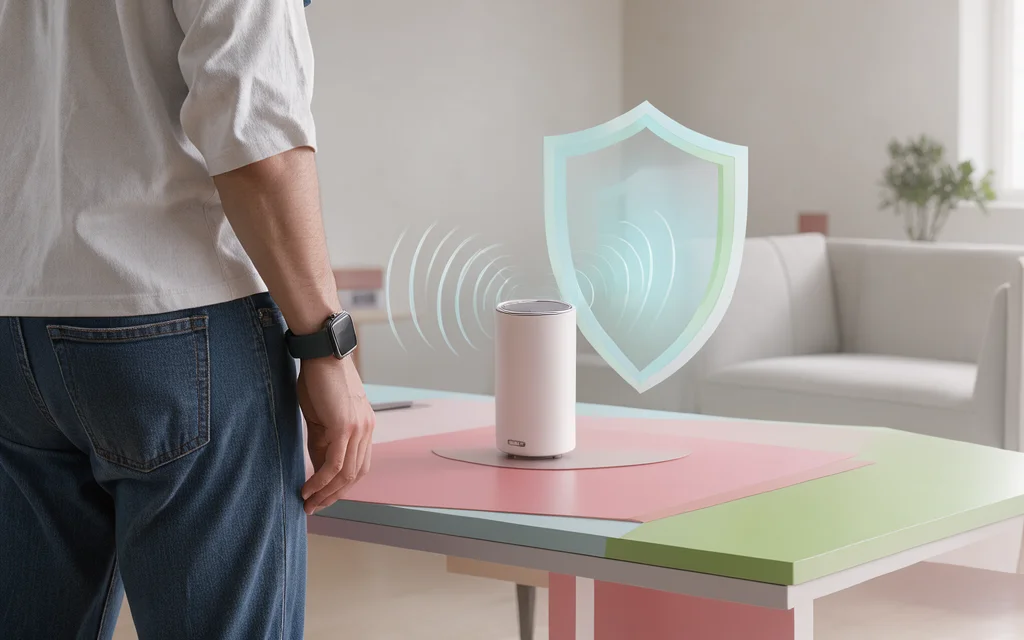
SmartVoice API enables your connected devices to provide clear, contextual audio feedback. Whether it is a microwave signaling completion or a thermostat adjusting temperature, the API delivers natural-sounding responses that enhance user interaction without requiring complex hardware.
For security systems, timely audio notifications improve situational awareness. Smart locks or cameras can announce events using distinct voices, ensuring users hear critical alerts even when not looking at their screens.
Voice feedback for smart appliances
Integrate TTS into ovens, refrigerators, or washing machines to announce cycle completion or errors. Use 'Sage' for calm instructions or 'Felix' for energetic prompts, ensuring users understand device status instantly.
The API handles multilingual outputs, allowing appliances to speak the user's preferred language automatically. This removes the need for pre-recorded audio files for every possible phrase, reducing firmware size.
- Announce cooking timers or laundry cycles
- Provide error codes in natural speech
- Support multiple languages simultaneously
Notifications for security systems
Smart locks, doorbells, and cameras can use the API to deliver clear audio alerts. A deep voice like 'Orion' can announce deliveries, while 'Nova' might signal motion detection, creating distinct auditory cues for different events.
Unlike generic beeps, synthesized speech conveys specific information, such as 'The front door is unlocked' or 'Package delivered.' This clarity improves trust and response time in security scenarios.
- Announce package deliveries
- Signal door lock status
- Custom alert tones per event
Audio prompts for voice assistants
Enhance your voice assistant's personality with consistent, high-quality audio. Use 'Aria' for a warm, helpful tone during routine queries or 'Atlas' for neutral news updates, maintaining brand identity across devices.
The API supports speed adjustments from 0.25x to 4.0x, allowing you to tailor response times for different contexts. Fast responses for simple commands, slower delivery for detailed instructions.
- Consistent voice personality
- Adjustable response speed
- Natural query responses
Getting Started with SmartVoice

Begin by signing up on the /get-api-key/ page using your Google account or email. This grants you a $0.50 free trial valid for seven days, perfect for testing integration with your smart home prototypes without any upfront commitment.
Once registered, your dashboard displays your unique API key, current balance, and usage statistics. You can generate a new key at any time, which immediately invalidates the previous one, ensuring secure access for your connected devices.
Sign up for a free trial
Visit the sign-up page to create your account. Choose Google for quick onboarding or use email and password. You receive $0.50 in credit (approx. 50,000 characters) valid for 7 days, allowing you to test the API’s capabilities immediately.
Generate your API key
After registration, your dashboard provides your active API key. This key authenticates your requests to the endpoint. You can issue a new key at any time; the old one stops working instantly, maintaining security for your IoT deployments.
- Access key details and balance instantly.
- Revoke and regenerate keys with immediate effect.
- One active key per account for simplicity.
Test with our curl example
Use the provided curl example to send your first request. The API accepts standard JSON bodies, allowing you to use the official OpenAI SDKs by simply adjusting the base URL to https://api.playll88.com/v1. Receive audio files directly in your development environment.
- POST request to /v1/audio/speech.
- Supports MP3, WAV, FLAC, and other formats.
- Instant response with audio data.
Why Choose Our TTS API?

SmartVoice API is built for product teams who need predictable costs and clear communication. We charge strictly by character usage with no hidden fees, subscriptions, or minimum spend requirements. This model scales naturally with your device deployments, ensuring you only pay for the audio generated.
Transparent pricing per character
Our rate is $10 per 1 million characters, which equals $0.01 per 1,000 characters. Spaces and punctuation count toward this total. Failed requests are free, so you are not charged for errors. There are no monthly plans or seats to manage.
- $0.01 per 1,000 characters
- No monthly fees or minimum spend
- Failed requests are free
Performance for critical devices
Requests are processed sequentially, so longer texts may queue under load. Typical generation speed is roughly real-time, producing about 25 characters of text per second. Short phrases may take a few seconds to synthesize. We do not offer an SLA or uptime guarantee, but the API is designed for consistent, reliable output for your connected products.
- Real-time speed: ~25 chars/sec
- Sequential processing ensures consistency
- No SLA or uptime guarantee
Email support
We provide dedicated support via email. There is no phone number or live chat, so you can reach our team directly without waiting in a queue. We focus on solving your technical integration questions efficiently.
- Email support only
- No phone or live chat
- Direct team access
Frequently Asked Questions

Find clear answers to common questions about integrating SmartVoice API into your smart home and IoT products. We cover pricing, technical details, and usage policies to help you build reliable voice experiences.
Whether you are testing with a free trial or deploying globally, these FAQs address the specifics of format, language support, and data handling relevant to connected devices.
What is text to voice free download?
We offer a $0.50 free trial credit, valid for 7 days, which generates approximately 50,000 characters of audio. This allows you to test the API without immediate payment.
How does the TTS API work for smart devices?
Send text via a simple JSON POST request to our endpoint. We return an audio file directly in the response. You can split long texts into 4096-character chunks to ensure reliable delivery for your device’s voice assistant.
Which languages are supported?
We support 23 languages including English, Spanish, French, German, Italian, Portuguese, Chinese, Japanese, and Korean. Any voice can speak any of these languages, ensuring broad market coverage for your smart devices.
Can I use the API for commercial products?
Yes, the API is designed for commercial use in smart home and IoT products. The licensed voices from LibriTTS-R and public-domain recordings allow you to integrate clear audio into your connected devices.
How much does the API cost?
Pricing is $10 per 1 million characters (or $0.01 per 1,000 characters). There are no monthly fees, no minimum spend, and no subscriptions. Failed requests are free.
What audio formats are available?
You can choose from mp3, wav, opus, flac, and pcm formats. This flexibility allows you to optimize audio quality and file size for different smart home devices and networks.
Is there a free trial available?
Sign up with Google to receive a $0.50 trial credit valid for 7 days. Accounts created with email and password start without trial credit but can top up immediately.
Do you support streaming audio?
No, we do not support streaming, WebSocket, or real-time partial audio. The API returns the complete audio file after synthesis, which typically takes a few seconds for short phrases.
Can I customize the voice tone?
We offer 8 preset voices (e.g., Aria for warmth, Atlas for news) but do not offer custom voice cloning or emotion tags. You can adjust speed from 0.25x to 4.0x.
How is the audio generated?
Voices are based on licensed recordings from LibriTTS-R (CC BY 4.0) and public-domain audiobook readings. Every generated file includes an inaudible watermark marking it as synthetic speech.
What happens if a request fails?
If synthesis fails, the charge is returned in full. Your balance remains unaffected, and you can retry the request with adjusted parameters like speed or chunk size.
Can I use the API with OpenAI SDK?
Yes, our endpoint matches the OpenAI speech endpoint shape. You can use the official OpenAI SDK by changing the base_url to https://api.playll88.com/v1 and using your API key.
How long are API keys valid?
Your API key remains active indefinitely until you issue a new one. Issuing a new key immediately stops the old one, allowing you to rotate keys securely.
Do you store the generated audio?
Generated audio is returned in the response and not stored. Input text is used only for synthesis and not for training models. We keep request metadata for billing purposes.
Listen to the 8 voices
Each sample below was generated by this API from the same sentence. Connect devices seamlessly to deliver intuitive, responsive living experiences.


23 languages
Any voice speaks any of these languages.